Voyagepa Thguide
  • Home
  • Ship Directory
  • Cabins & Berths
  • Dining & Lounges
  • Casinos at Sea
  • Gallery
  • Contact
Explore Cruises & Port Guides (opens in a new tab)

Visual field guide

Cruise spaces, read with practical context

Voyagepa Thguide is an independent English-language New Zealand cruise review, cabin guide, and maritime travel portal. This collection looks beyond brochure language to help you notice the room proportions, shared-space routes, deck exposure, and sailing conditions that can shape life at sea.

Use the photographs as visual evidence while comparing cruise experiences and preparing better questions about cabins, onboard areas, and destination viewing. We provide guidance and comparisons; Voyagepa Thguide is not a cruise operator or booking agency.

Explore Cruises & Port Guides (opens in a new tab)

Official destination directory · opens in a new tab

Independent visual guidance for research, not a catalogue of cruise products or booking offers.

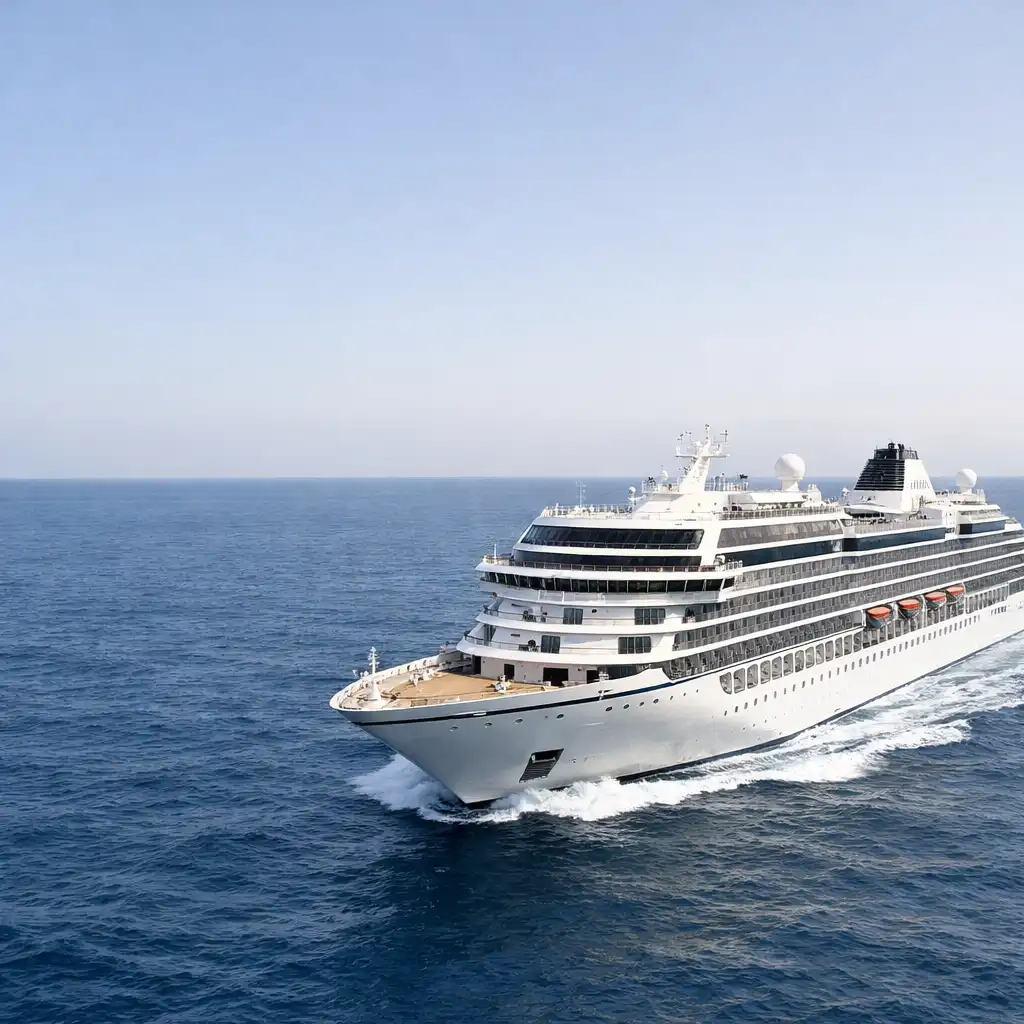
Modern white cruise liner travelling across calm open sea beneath a pale horizon
Field view 01 · Ship scale, layered decks, open-water context

Reading the images

How to read the collection

Space and layout

Look past the polished room view

Room proportions, circulation space, furniture placement, window position, and doorway clearance often say more than a flattering photograph. Notice how a bed, sofa, desk, storage, and balcony threshold share one footprint. Images support comparison, but they do not replace a current deck plan or a ship-specific accessible-cabin specification. Our cabin guidance also considers accessibility, storage, motion, view, and noise.
Observe

Read time of day as context

The same onboard area can feel different in daylight and after dark. Lighting, circulation patterns, nearby venues, and operating hours all influence the experience of recreation, dining, and casino spaces. Treat each scene as a prompt to ask practical questions, not as evidence of a particular ship’s crowd levels, programme, or daily schedule.

Landscape and ship context

Check the position behind the view

Scenic images are useful for reading viewing position, weather exposure, railings, deck access, and the scale of ship against destination scenery. Milford Sound later in this guide is one example. Daylight, route, weather, and operational decisions can change what is visible, so use landscape photographs to prepare rather than to expect a guaranteed scene.

See the setting, then ask what supports it.

Caption key. Every image identifies its setting and adds a practical observation point through “What to notice” or a useful next step. Images are illustrative rather than a guarantee of ship-specific equipment, conditions, or operations. Voyagepa Thguide offers guidance and comparisons, not booking promises.

Cabin views

Daylight, storage, and privacy

Two room types can look distinct in a photograph, yet each needs the same practical reading: where the route through the room sits, what the door or window changes, and which details need confirmation from a current ship plan.

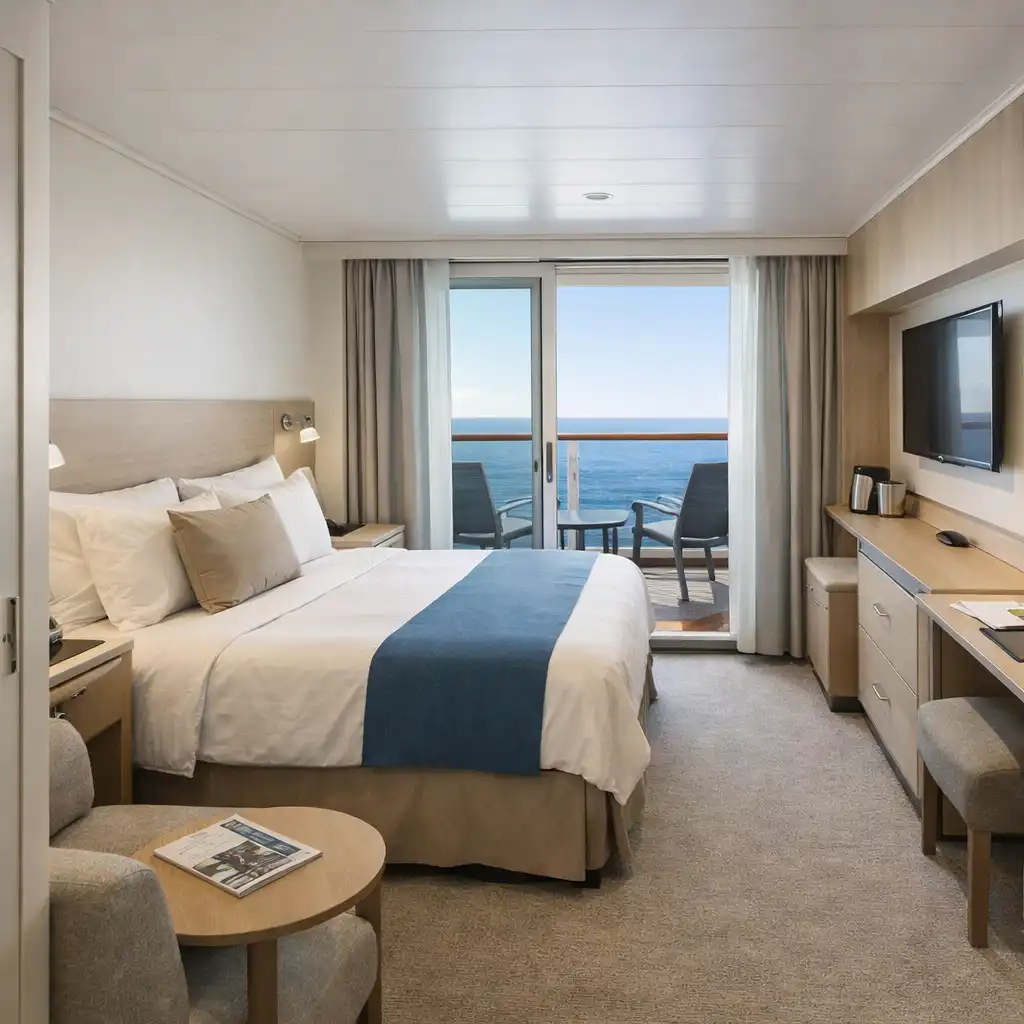
Bright balcony stateroom with bed, seating, storage edge and sliding door opening to sea-view balcony

Balcony · What to notice

Balcony stateroom perspective

This bright room is useful for assessing balcony depth, threshold placement, window light, seating footprint, and the balance between view and interior floor area. Look at where the bed and seating sit relative to the glazed door, and whether the route to the balcony stays clear. Furniture and arrangements vary by ship and category. A view alone does not answer questions about motion, noise, privacy, or the exact deck location.

Explore practical cabin comparisons
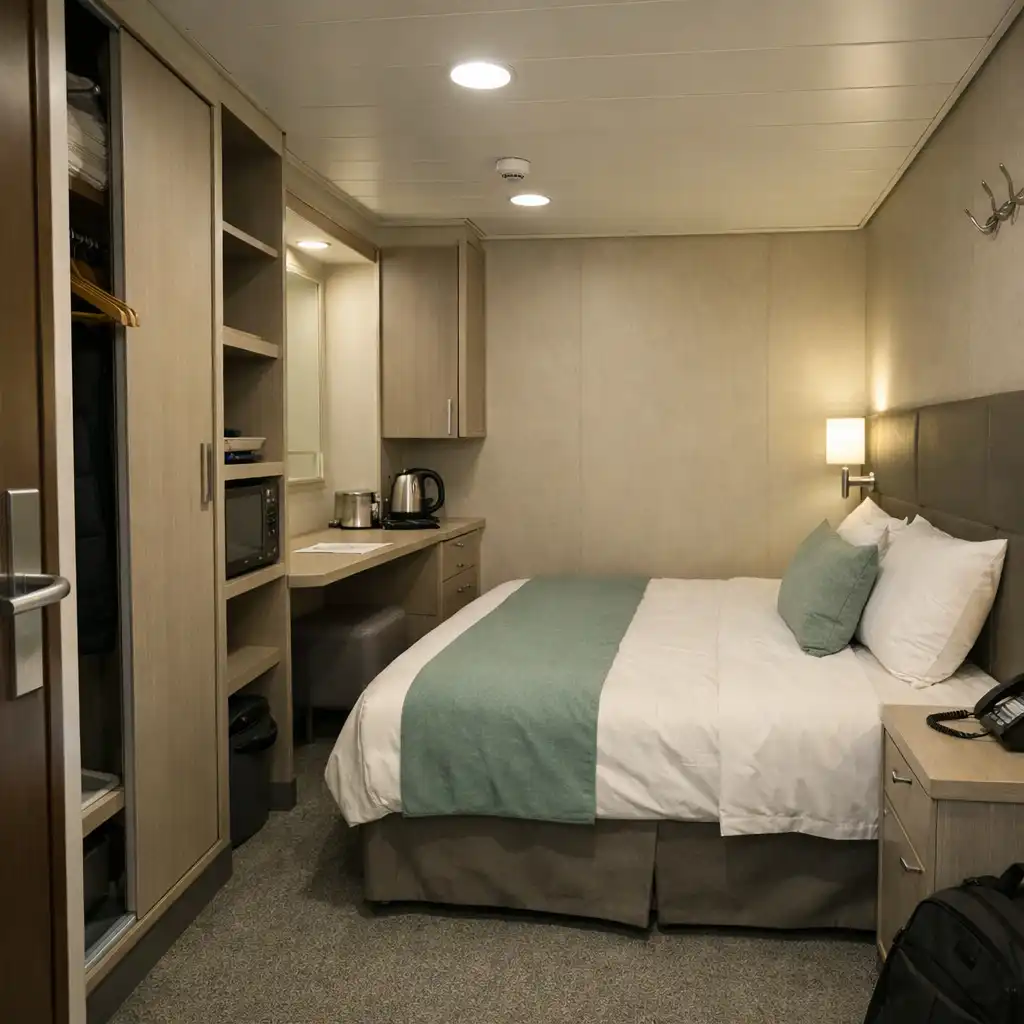
Functional interior cruise cabin with compact bed, desk, storage and clear luggage route

Interior · What to notice

Interior cabin perspective

An interior cabin can be a practical choice depending on priorities and itinerary. This view helps you inspect the lighting strategy, bedside access, storage placement, luggage circulation, and whether the room looks workable for everyday routines. The useful question is not whether the room looks grand, but whether its layout supports the way you travel. Check exact dimensions and accessible features through current ship-specific information.

Compare beyond the photograph

Use both images as a checklist, then check deck location, proximity to lifts and venues, view type, storage, accessible requirements, and likely noise or motion exposure. A cabin image is only one layer of a sound comparison. Continue to Cabins & Berths for practical questions about room position and deck layouts.

A cabin choice is also a deck-plan choice

Deck check 01

Location changes the experience

A cabin’s deck, forward, mid, or aft position, and relationship to public venues can influence movement, noise, lift access, and the time needed to reach dining or open decks. None of these effects are guaranteed, but comparing current ship deck plans alongside room imagery gives useful context before you narrow a choice.

Deck check 02

A view is not the whole layout

A balcony or window view belongs alongside questions about obstructions, privacy, door placement, usable floor area, and the time you expect to spend in the cabin. The preceding image is a starting point; use the Cabins & Berths guide to keep the layout questions in view.

Deck check 03

Accessibility needs direct confirmation

Check ship-specific accessible-room details, clearances, bathroom layouts, and assistance arrangements through authoritative current information. General images cannot confirm the features relevant to an individual traveller, so this is a careful research step rather than an assumption based on appearance.

18+ context

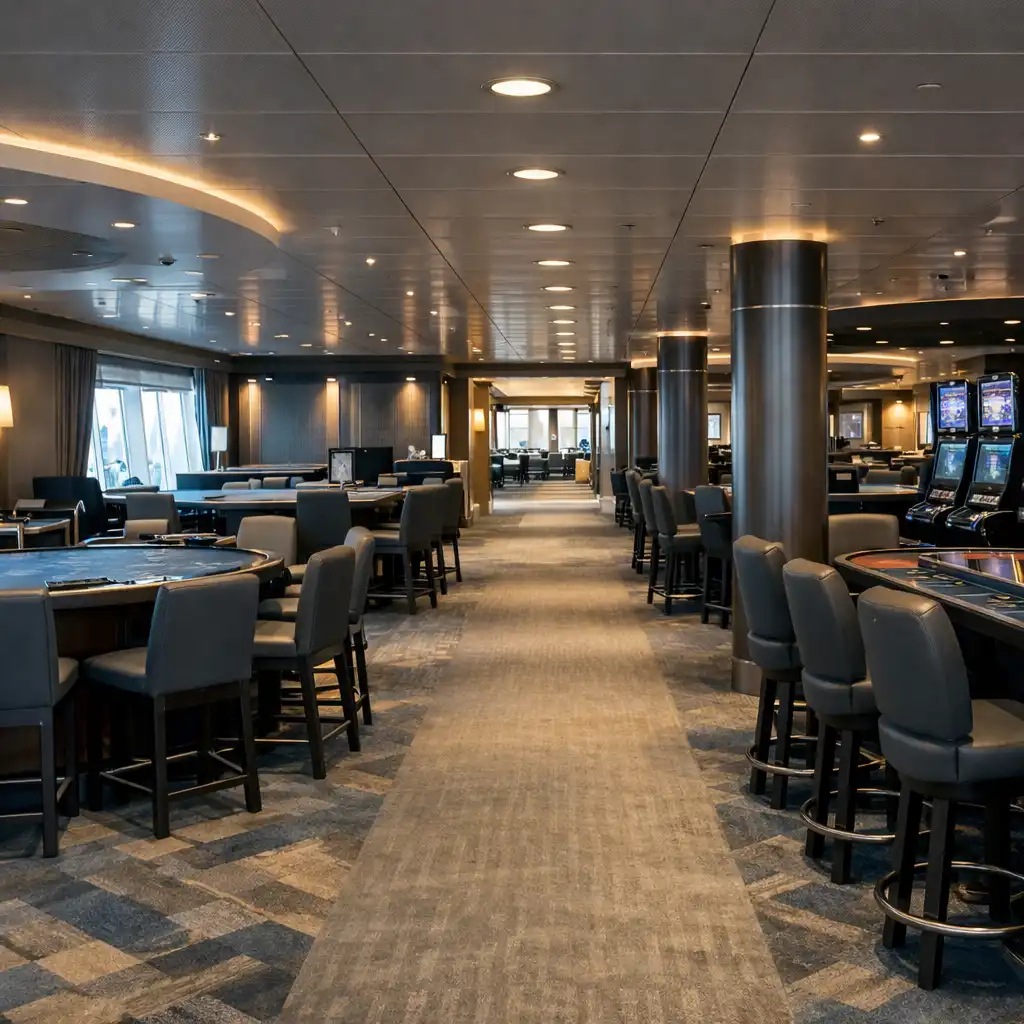
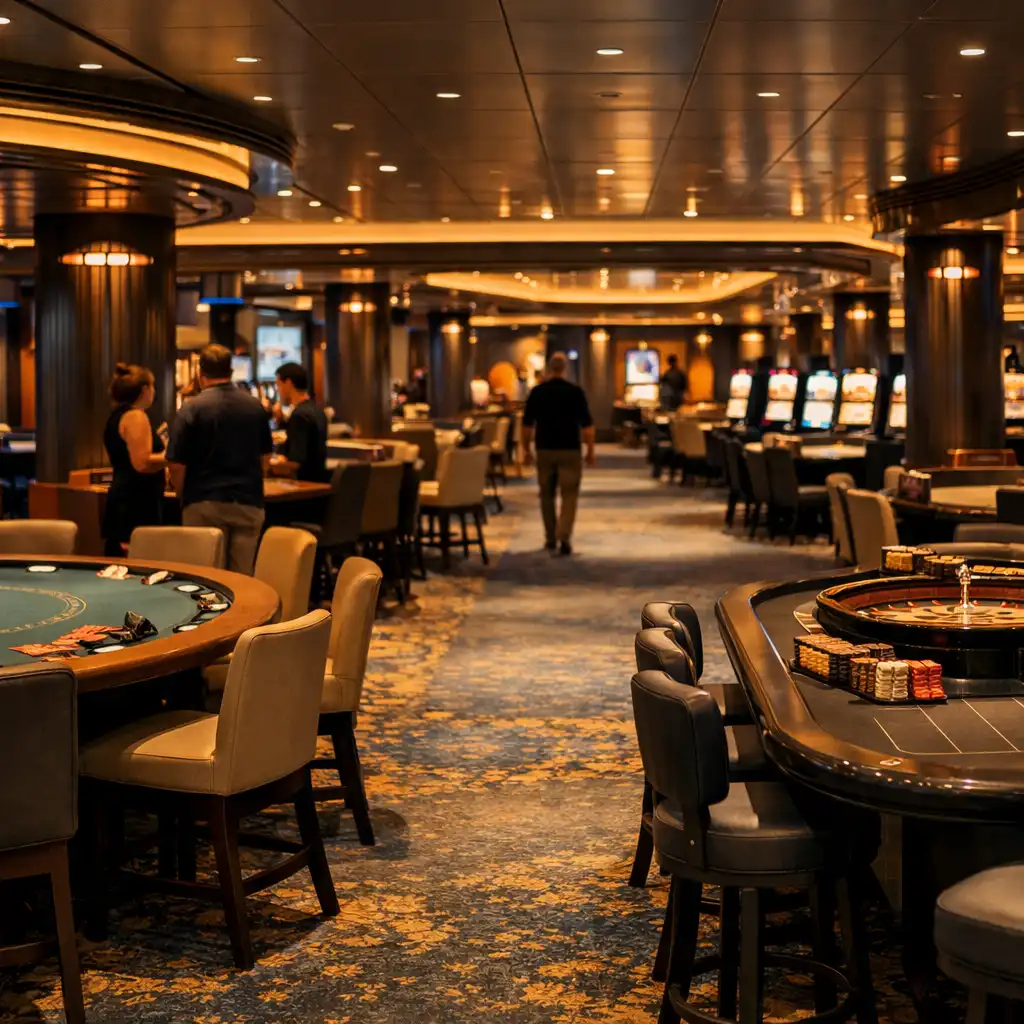
Casino environments: daylight and evening

These scenes show surroundings, not an invitation to gamble. Onboard casino operations can vary with itinerary, operating rules, and location, including the international-waters context that may apply at sea.

Daytime cruise casino floor showing tables, seating and a clear central circulation route

18+ · Daytime view

Daytime casino floor

In brighter conditions, circulation routes, seating density, table layout, and the relationship to surrounding ship spaces can be easier to see. This is environmental context, not confirmation that a casino is open during the day. Casino play is optional adult entertainment, and onboard operations may vary with itinerary, location, and current rules. Read the room for access and wayfinding rather than treating gambling as a required part of cruising.

Read Casinos at Sea guidance
Evening cruise casino floor with warm lighting, tables, seating and open passage through the room

18+ · Evening view

Evening casino floor

After dark, lighting and ambience can change the feel of a shared venue. This photograph shows room depth and a practical passage through the space, but it cannot confirm operating hours, games, limits, or venue policies. View it as a neutral record of atmosphere rather than an inducement. International-waters context and current onboard rules can affect how a casino operates on any particular sailing.

18+

Responsible play comes first

Casino play is for adults aged 18+ only and is best treated as optional entertainment. Set a personal spending limit, choose a time boundary, and be ready to step away. International-waters context and onboard rules can affect operations, so check current ship and itinerary information directly. Visit Casinos at Sea for Voyagepa Thguide’s responsible-play guide and further practical context.

Continue to cruise and port research

Move from onboard visual context into official New Zealand cruise and port research. The directory is an external destination for further planning information; Voyagepa Thguide does not sell, manage, or guarantee cruise products.

Explore Cruises & Port Guides (opens in a new tab)

On deck

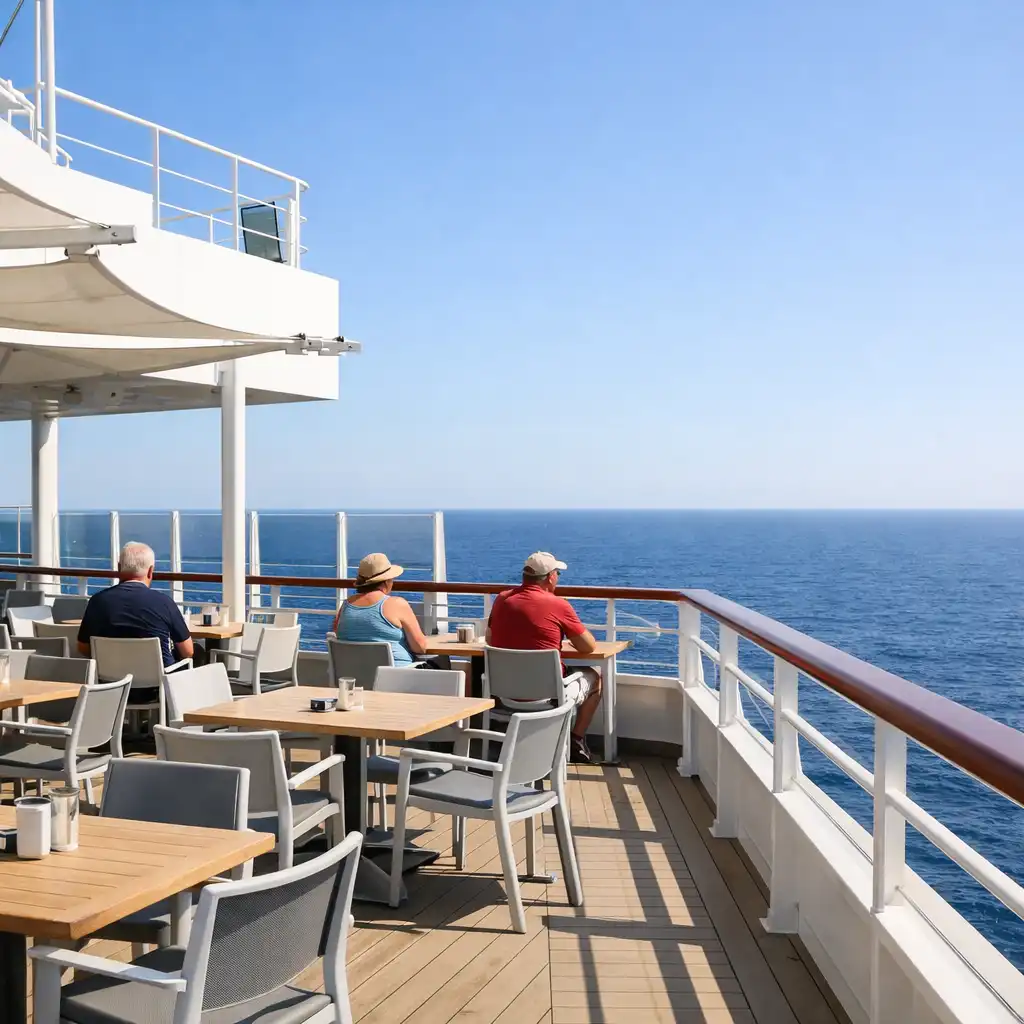
Open-air dining: space, weather, and rhythm

Open-air cruise deck dining area with tables, pathways, railings, shade and ocean horizon

Dining outdoors is a setting as well as a meal

This image is useful for assessing deck exposure, shade, seating spacing, proximity to railings, and the relationship between a dining area and passing scenery. Outdoor use can be affected by weather and operational choices, and a photograph cannot establish a menu, venue name, opening schedule, or service level. For onboard pace and practical comfort, observe the pathways around seats as closely as the view beyond them.

Explore Dining & Lounges
  1. Sun and wind exposure. Look for shading, shelter, and seat orientation rather than assuming all exterior dining feels the same.
  2. Routes through shared space. Notice whether diners, walkers, and nearby recreation areas appear to share a circulation path.
  3. Day-to-evening flexibility. Check a ship’s current daily programme rather than relying on one photograph of venue use.

Scenic sailing

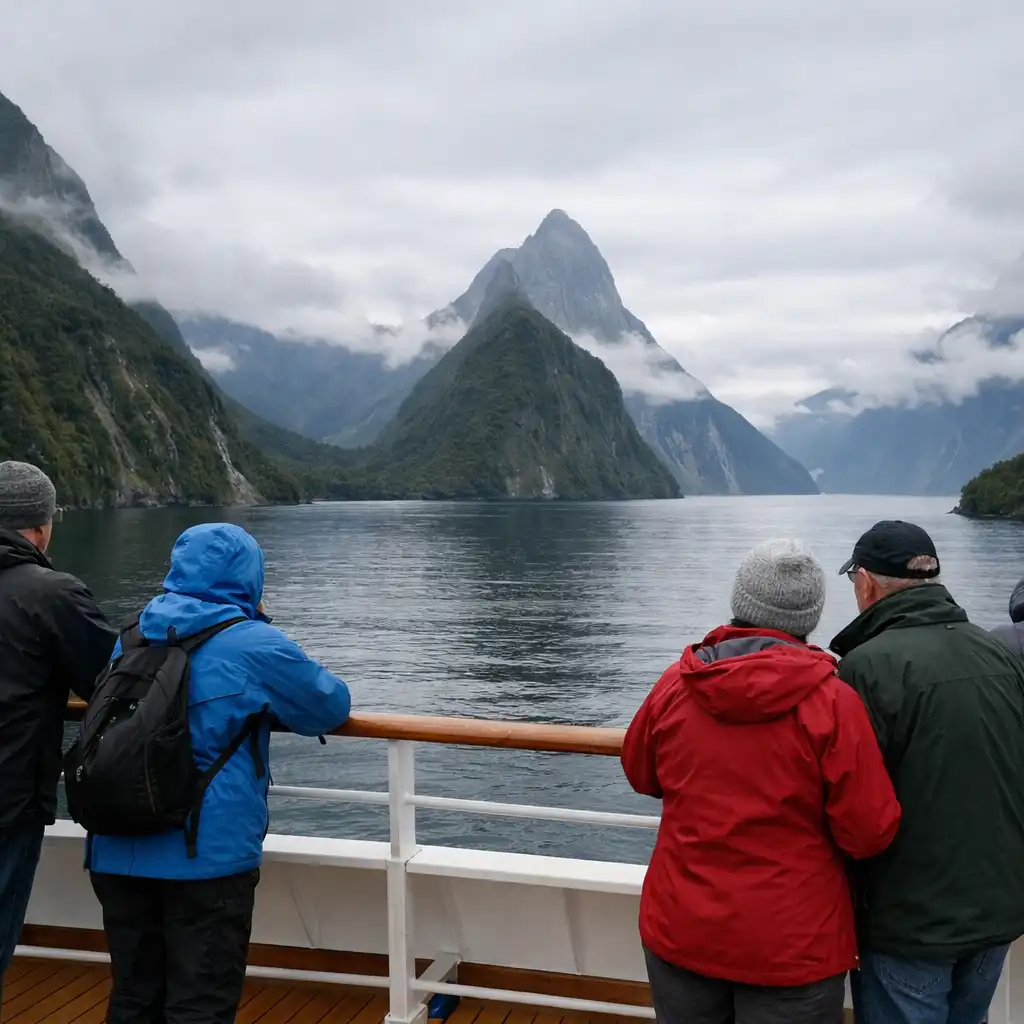
Milford Sound from the observation deck

Travellers in outerwear viewing Milford Sound mountains and water from a cruise ship observation deck
Visible railings, open deck space, changing weather, and the scale of the fjord are all part of the viewing context.

The viewing deck is part of the experience

This Milford Sound scene is best read through its visible details: rail position, open sky, deck space, fellow travellers, mountain scale, and the value of choosing a viewing position rather than only seeking a photograph. Weather, light, route, and operational conditions influence scenic sailing, so an image cannot guarantee a particular view or voyage sequence. It can, however, remind you that practical deck access and the changing conditions around it matter as much as the destination itself.

Before you head out

Practical viewing prompts

  • Check the day’s programme for current viewing context.
  • Dress for changing deck conditions and exposure.
  • Leave time to find a comfortable, safe position.
  • Remember that outdoor viewing may not suit every weather condition.

For additional cruise and port context, use the official New Zealand cruise directory (opens in a new tab) after considering the image’s visual conditions.

What this gallery can and cannot confirm

Useful visual evidence

Photographs can help you understand proportion, daylight, deck exposure, atmosphere, and the practical questions worth asking as you compare cruise experiences. Across cabins, dining, casino surroundings, recreation spaces, and scenic sailing, an image can make a detail easier to spot and discuss before you move to current planning information.

Not a current ship specification

Images cannot establish a vessel’s present layout, cabin inventory, accessibility provision, venue operations, itineraries, sailing conditions, or onboard rules. Those details require current authoritative sources. Voyagepa Thguide is independent and does not present itself as a cruise operator or booking agency, so its role is to help frame the research rather than make operational promises.

Use the right guide for the next question: Ship Directory · Cabins & Berths · Dining & Lounges · Casinos at Sea. Each topic page develops the practical comparisons that a single image can only begin.

Next research stop

Move from visual context to current port research

Use this gallery to prepare better questions about cabins, onboard spaces, and scenic sailing, then continue with official New Zealand cruise and port information. Current cruise details should always be checked through authoritative sources, especially where layouts, operations, conditions, and accessibility needs are concerned.

Explore Cruises & Port Guides (opens in a new tab)

Voyagepa Thguide is independent guidance, not a cruise operator or booking agency.

Voyagepa Thguide

Independent New Zealand cruise research for practical ship, cabin, port and onboard-life comparisons.

+64 9 883 4721 [email protected] 24 Quay Street, Auckland 1010, New Zealand

Explore

  • Home
  • Ship Directory
  • Cabins & Berths
  • Dining & Lounges
  • Casinos at Sea

Information

  • Gallery
  • FAQ
  • Contact
  • Privacy Policy
  • Cookie Policy
  • Terms of Service

Tasman Deck NZ is an independent travel review and informational directory. It is not affiliated with, operated by, or endorsed by any commercial cruise line, port authority, or government entity. All cruise ship names, trademarks, vessel imagery, and brand marks remain the property of their respective owners.

© 2026 Voyagepa Thguide. Independent New Zealand cruise guidance.

Cookie preferences

We use essential storage to remember this choice and improve basic site operation. Read our Cookie Policy.